U.S. agency hits Utah with lawsuit to shield Kalshi's ability to offer betting there
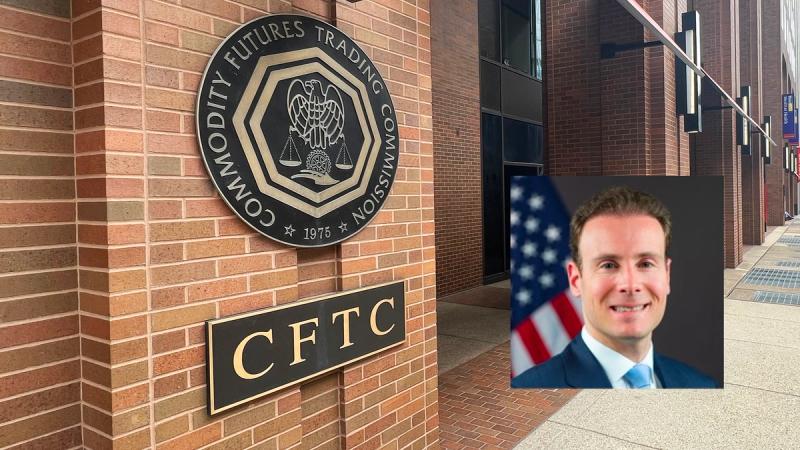
- The Commodity Futures Trading Commission has added to its lengthy lists of court actions against states in its ongoing commitment to protect its position as the lone regulatory authority over Kalshi and other prediction market firms — this time, Utah.
- Gambling is illegal in the state, which has been pursuing a legal effort to halt Kalshi’s offerings there, but the CFTC is arguing its federal authority preempts the state’s.
The U.S. agency that oversees derivatives has filed a federal legal challenge to halt Utah's attempt to stop prediction market betting in its state, where gambling is constitutionally banned.
The U.S. Commodity Futures Trading Commission is asking the court to put a stop to the Utah attorney general's enforcement effort last week that was meant to restrict Kalshi from offering gambling to residents in the state, where it's illegal. After Utah has so far prevailed against Kalshi in federal court, the federal agency is weighing in with its own lawsuit, the CFTC said on Tuesday.
"Event contracts do not just serve hedging and investment purposes — they also provide the public with information about the outcome of future events," said CFTC Chairman Mike Selig in a statement, which also further defended what he sees as his agency's legal role as the sole regulator of prediction markets.
The matter of the dispute between states' legal rights and federal preemption (with Kalshi and other prediction market firms firmly on the latter side) has grown increasingly complicated due to conflicting rulings from various courts. Three federal appellate courts have issued two decisions that sided with the states and one that went Kalshi's way. In Utah, a U.S. district court judge sided with the state in a case that's also under appeal.
"Anyone offering gambling to Utahns is on notice that it is illegal in Utah and that no Utah law authorizes it," Attorney General Derek Brown said in a statement last week, accusing Kalshi of running an online casino.
The CFTC is currently battling 10 states in court and has been filing legal arguments across the full spectrum of the judicial system — all while having been cut in legal staffing as the administration of President Donald Trump has sought to reduce U.S. regulatory forces.
While Selig's view is uncompromising about the CFTC's proper role, another former agency chairman, Democrat Gary Gensler, filed a brief with the U.S. Supreme Court to argue that Selig's read is wrong and that the law Gensler helped usher in wasn't meant to be interpreted this way. Gensler — better known in crypto circles as the recent ex-chair of the Securities and Exchange Commission — told the high court that the Dodd-Frank Act the agency uses as its legal justification "did not transfer jurisdiction over sports betting from the states to the CFTC."
Bültenler
One of the authors of the Dodd-Frank Act, former Senator Chris Dodd, similarly filed an amicus brief agreeing with the state view.

- 1Treasury's Bessent sees crypto as America's next tool for keeping the U.S. dollar on top29 minutes ago
- 2Robinhood's crypto revenue fell 55% from last year, but topped Street forecasts38 minutes ago
- 3Intel, Oracle, IBM join growing list of firms objecting to OKX–ICE tokenized stock plans2 hours ago
- 4Brazilian companies turned to stablecoins on election day to dodge a currency crash4 hours ago
- 5Robinhood taps Ripple’s $2.5 billion RLUSD stablecoin despite backing rival USDG4 hours ago
- 6Nasdaq-100 comes onchain as Janus Henderson and Centrifuge launch first licensed fund6 hours ago
- 7CF Benchmarks brings Wall Street pricing infrastructure onchain, including data used by BlackRock7 hours ago
- 8Bitcoin miners' move into AI is creating a new market for trading computing power7 hours ago
- 9Bitcoin shows signs of weakness while Ripple's bank win fails to bolster XRP9 hours ago
- 10Live updates: Bitcoin edges higher as Nasdaq surges 1.2%9 hours ago
Beyond the Risk-Free Rate: Diversified Real World Yield in Productive Stablecoins

Beyond the Risk-Free Rate: Diversified Real World Yield in Productive Stablecoins
Diversified RWA stablecoins sustain 5-7% yield from real credit as crypto funding compresses to ~4%. GENIUS pushes yield off-chain; TAM grows to $4B in 3 years.
Diversified RWA stablecoins sustain 5-7% yield from real credit as crypto funding compresses to ~4%. GENIUS pushes yield off-chain; TAM grows to $4B in 3 years.
Why it matters:
Diversified RWA stablecoins sustain 5-7% yield from real credit as crypto funding compresses to ~4%. GENIUS pushes yield off-chain; TAM grows to $4B in 3 years.

Treasury's Bessent sees crypto as America's next tool for keeping the U.S. dollar on top

NBA joins pro sports leagues on CFTC prediction markets bandwagon while NFL balks

OCC calls on community banks to enter the stablecoin payments market
Related stories

Treasury's Bessent sees crypto as America's next tool for keeping the U.S. dollar on top

Robinhood Taps Ripple's Stablecoin, Treasury Software and Trading Loans

CFTC sues Utah to block action against prediction markets